
In the past few weeks, I have met three – yes three – people who have been sold hearing aids that do not have a telecoil, the “T” setting that picks up hearing loops.
All three said they were told that these new modern hearing aids had the latest Bluetooth technology and “would do all that they need.”
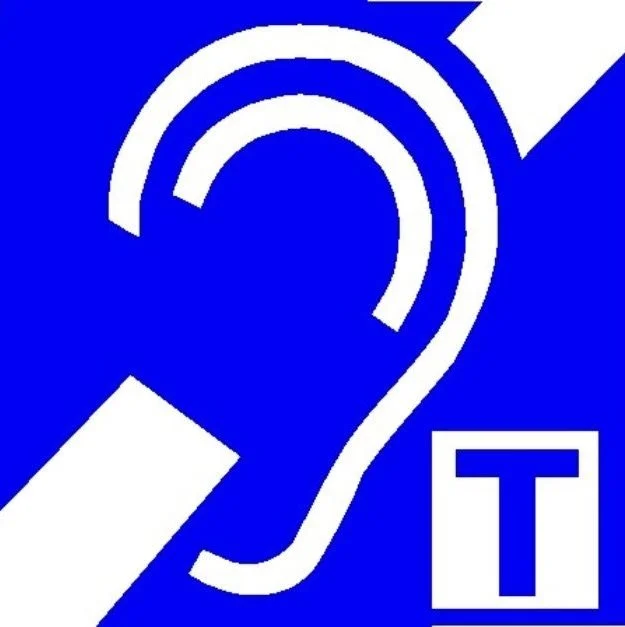
Hearing loop symbol: a white ear and the letter T on a blue background. Look for this sign wherever a hearing loop is fitted.
Then these good people discovered there is something called a hearing loop. Whoever sold them those hearing aids did not even mention such a useful facility.
Why did this happen? Well, one has to recognise that the imperative of meeting sales targets might have been a contributory factor. But the sad fact is that audiologists in the private sector tend to be sucked into the marketing hype of certain hearing aid manufacturers who claim that the hearing loop is obsolete, simply because it is old technology.
It is not. Nor will it be for a good while yet.
Until recently, practically all hearing aids would contain a telecoil, which lets the wearer hear sound clearly and directly from a hearing loop. (These loops are typically to be found in churches and theatres, and anywhere displaying the distinctive blue sign, such as GP surgeries, pharmacies, banks, shops, libraries, on trains and buses and at airports.)
The facility just needs to be turned on by the audiologist.
Enter Auracast – a new protocol running on Bluetooth, which will eventually allow all kinds of digital devices, including hearing aids, to receive broadcast messages. At the time of writing, the National Theatre is trialling it in its Dorfman Theatre.
My hearing aids are supposed to be Bluetooth compatible, but my mobile phone, which is only two years old, cannot download the necessary app in order to communicate properly with them. I get round it by using a streaming device which passes phone calls from Bluetooth to my hearing aids’ T setting. It only cost me a couple of hundred pounds!
The vision of Auracast as a universal broadcast medium is at best still something of a pipe dream. For it to completely replace the hearing loop, every single person with hearing impairment must have hearing aids which are both Bluetooth and Auracast compatible, and a mobile phone which is equally equipped. I am not in the market for a new mobile phone. I belong to the generation that makes things last as long as possible. For me the hearing loop will be essential for a good many years to come, and there are many more like me.
In my view, any audiologist who fits hearing aids without a telecoil, and without even mentioning it, is falling short of their duty of care.
So next time you are offered new hearing aids, ask directly: “Does this model have a telecoil, and will you switch on the T programme?” Do not be taken in by claims that Bluetooth is the answer to all your needs.
And if you have recently bought hearing aids without one, check whether you are still within the trial or return period – many providers offer 30 to 60 days.